
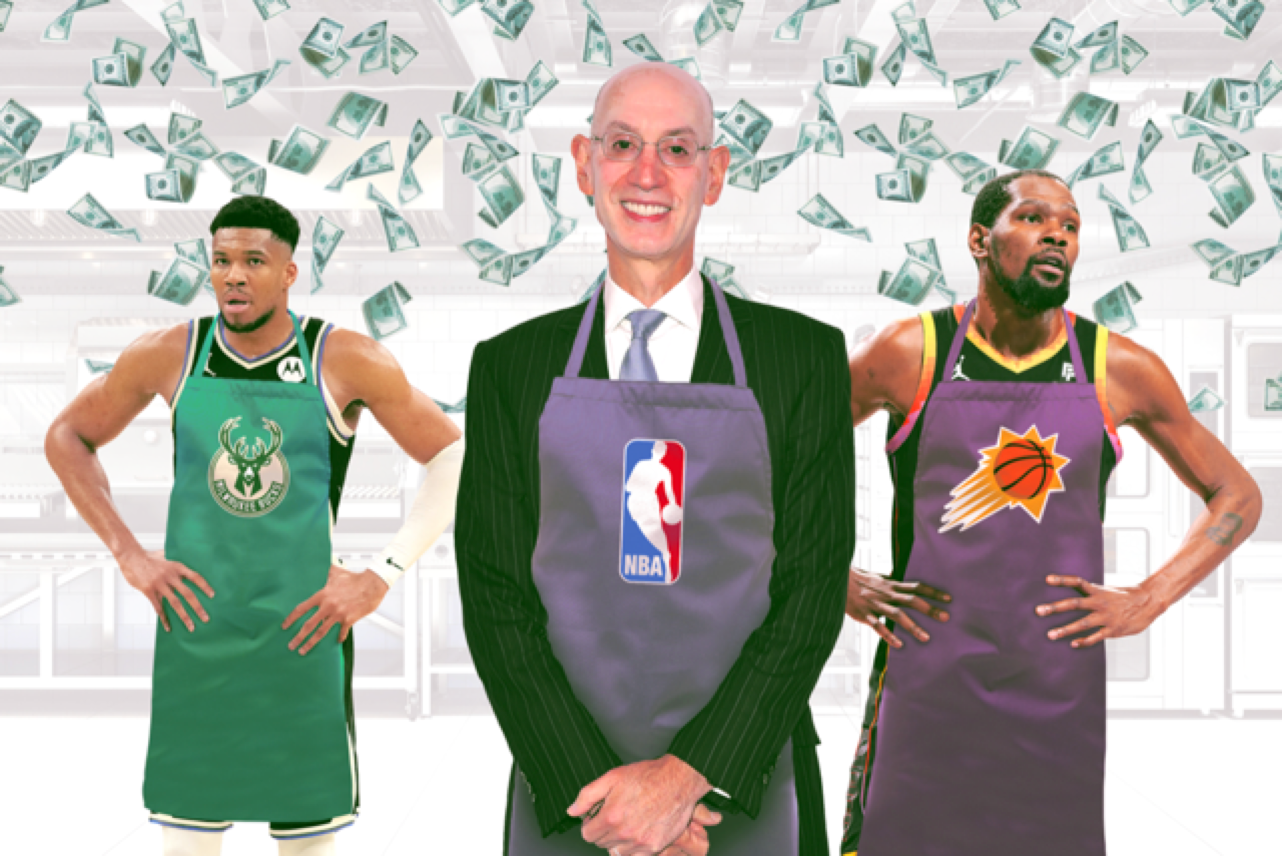
The second apron is the reason NBA front offices talk about roster building differently than they did five years ago, and this week’s Clippers penalties are a reminder of just how seriously the league now treats the line separating contenders from restricted teams.
For 2026-27, the NBA’s salary cap is set at $165 million, with a salary floor of $149 million. Above that sits the luxury tax threshold at $201 million, the first tax apron at $209 million and the second tax apron at $222 million.
Cross the second apron and a team loses tools most front offices consider basic: it cannot use the full mid-level exception, cannot aggregate multiple players’ salaries together in a trade, cannot send cash as part of a trade, and cannot acquire a player via sign-and-trade. In practice, teams above the second apron are largely limited to matching salary in trades one-for-one and filling out the rest of the roster with minimum contracts.
Those restrictions were designed to stop teams from paying, trading and spending their way around normal roster limits. The Clippers’ punishment this week for circumventing the salary cap through off-books endorsement deals with Kawhi Leonard, five forfeited first-round picks and a $30 million fine, shows how far the league is willing to go to enforce the spirit of those rules even when a team stays under the aprons on paper.
For fans trying to make sense of why a team suddenly cannot take back extra salary in a trade, or why a contender is quietly shedding a rotation piece for nothing in August, the second apron is very often the answer. It does not just tax teams for spending. It removes their tools for spending more, one violation at a time, and it is the backdrop against which every notable transaction this season, from Amen Thompson’s extension in Houston to the futures of the league’s most decorated rosters, will be judged.
5 thoughts on “The Second Apron, Explained: How the NBA’s Hardest Cap Line Is Reshaping 2026-27”