
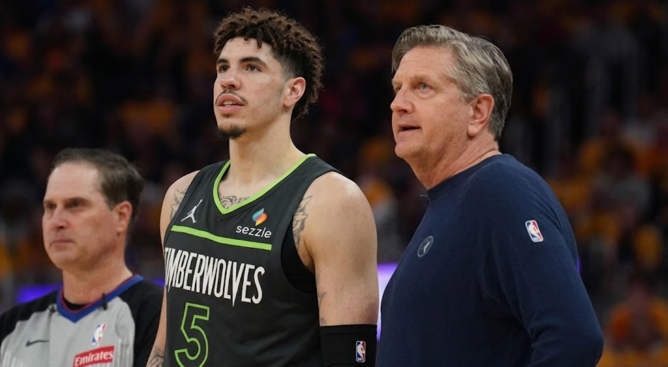
Finch Lays Out the Plan, On the Record
Chris Finch spent part of his offseason explaining, in detail, what he actually needs from a Minnesota Timberwolves roster that looks meaningfully different than the one that closed last season. In an interview with MinnPost’s Britt Robson, the Wolves coach walked through specific, position-by-position asks for his two most important returning players and his newest addition, rather than offering the usual training-camp platitudes about competition and chemistry.
“The tentpoles are still here,” Finch said, referring to Anthony Edwards, Rudy Gobert and Jaden McDaniels, even as the roster around them turned over. Minnesota lost guards Ayo Dosunmu and Donte DiVincenzo, center Naz Reid and assistant coach Micah Nori this offseason, while adding guard LaMelo Ball in a four-team trade with Charlotte. That’s the balance Finch is managing: real continuity at the top of the roster, real change everywhere else.
The Actual Ask for LaMelo Ball
The clearest, most specific thing Finch said all offseason concerns Ball’s shot selection, and it wasn’t vague coach-speak. “If you want to be a good shooter, the first thing you should do is get rid of the bad shots,” Finch said. “He does take some, and he can make them. But I think he has relied heavily on it.” That’s a direct critique of shot diet from the person who will be building Minnesota’s offense around Ball, not a generic call for “efficiency.” Ball is a career high-volume shooter who has never lacked for confidence in difficult looks; Finch is naming that tendency specifically and asking for less of it.
The other half of Finch’s read on Ball is more complimentary, and speaks to why Minnesota traded for him in the first place. “I think he goes into the paint a lot of the time as a passer, with a passing mentality, because he is so elite at it,” Finch said. Put those two quotes together and the picture is a coach who values Ball’s downhill passing without qualification, while treating his jumper selection as the specific, fixable thing standing between him and a more efficient version of himself in Minnesota’s system.
What Changes for Anthony Edwards
Ball’s arrival isn’t just about Ball. Finch was explicit that adding a lead guard who can create offense changes what he needs from Edwards, who has carried an enormous ball-handling and shot-creation burden for Minnesota in recent seasons. “His on-ball handling duties on offense will be reduced, which was probably the most taxing thing for him last year,” Finch said. That’s a real structural shift, not just a talking point: if Ball absorbs primary ball-handling minutes, Edwards gets to expend less energy initiating offense possession after possession.
Finch wants that saved energy spent somewhere specific. “I think we are going to need him to get back to being a more high-leverage defender for us,” he said, tying it directly to Edwards’ ceiling as a player. “For him to have an MVP season, he has to have more of a defensive component.” That’s a notable thing for a head coach to say about a 24-year-old who already made an All-NBA team on the strength of his offense: the path to the highest individual honor in the sport, in his own coach’s framing, runs through defense, not more scoring.
McDaniels’ Expanded Job Description
Jaden McDaniels rounds out Finch’s tentpole trio, and the coach wants more from him too, both as a passer and in a role Minnesota experimented with last season. Finch called McDaniels “one of our best interior passers” when he’s playing out of the post or as a connector, and pointed to real value in using him at small-ball center in certain looks. “We did find a lot of zone success with Jaden in the middle in the five,” Finch said, suggesting that wrinkle is likely to stay in the rotation of options rather than get shelved as a one-off adjustment.
Why This Interview Actually Matters
Coaches rarely lay out this much specific, player-by-player detail before camp even opens, which is what makes Finch’s comments worth more than the standard offseason check-in. He isn’t just confirming that Minnesota added talent this summer; he’s describing exactly how he intends to use it, down to the specific bad habit he wants Ball to break and the specific defensive standard he’s setting for Edwards. Training camp will be the actual test of whether those individual asks translate to the group, but Finch has already put a very clear, very public version of his plan on the record. That leaves less room for ambiguity than most preseason coach-speak, and it gives Minnesota’s roster turnover an actual framework to be judged against once real games start.