
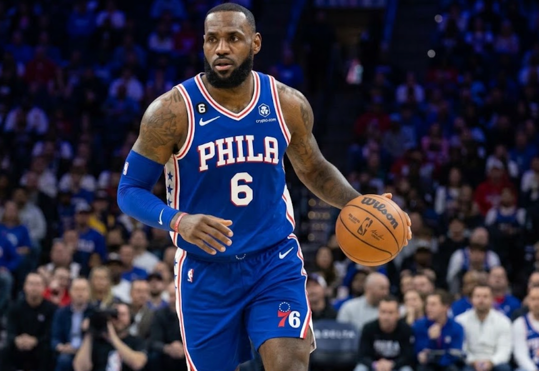
A 24th Season Begins in a New City
LeBron James is starting over, on his own terms. On July 27, 2026, the four-time NBA champion officially signed a two-year, $8 million contract with the Philadelphia 76ers, ending an eight-season run with the Los Angeles Lakers and opening his 24th NBA season since entering the league in 2003. He is 41 years old, a 22-time All-Star, and by his own account, he spent this past offseason deciding whether he wanted to keep playing at all.
“This is my last decision,” James wrote when he announced the move on social media three days before it became official. “I’m not going for money. I’m not going for family. What am I really playing for at this point? I still want to sacrifice. I still want to work. I still want to grind. I still want to compete, to win and to have a chance at the feeling of winning.”
It is a strange thing to hear from someone who has already won four championships and built a case as the greatest player in NBA history. But James has been unusually direct about where his motivation actually comes from at this stage of his career, and the contract itself makes the point for him: $8 million a year is a fraction of the $53 million he earned with the Lakers last season. Whatever brought him to Philadelphia, it was not the money.
From “The Decision” to “My Last Decision”
James has done this before, in a much louder way. In July 2010, he announced he was leaving Cleveland for the Miami Heat on a nationally televised special that became known simply as “The Decision,” a moment that reshaped how the league talked about player empowerment for the next decade and a half. Sixteen years later, there was no primetime special, just a social media post and a phrase, “my last decision,” that framed this move as a closing chapter rather than another headline-chasing pivot.
That framing matters because of what James said explicitly he is not chasing. He is not going home, the way he did when he returned to Cleveland in 2014. He picked a team he has never played for, in a city with no prior connection to his career, built around a young core that includes Tyrese Maxey and second-year guard VJ Edgecombe. “I believe I can help make the Philadelphia 76ers a championship team and I am so excited to energize a new fan base and start this incredible journey one last time,” James said.
The Roster He’s Walking Into
James is not walking into a rebuild. The 76ers used this same offseason to acquire Jaylen Brown, the 2024 Finals MVP, from the Boston Celtics in a trade that sent Paul George and draft compensation to Boston, pairing James with a second champion alongside Joel Embiid and Maxey. That gives Philadelphia two players with championship rings on a single roster and four established scorers overall, a level of accumulated star power the franchise has not carried in decades, built around James at an age when most of his draft class is already retired.
A Sept. 12, 2026 analysis of how the Sixers will structure their late-game offense projected James as central to that plan, noting he was the Lakers’ second-leading clutch-time scorer as recently as last season. That is a notable detail on its own: at 41, James is not being brought in purely for name recognition or locker-room presence. The reporting suggests a team planning to actually play him in the moments that decide games, not hand him a ceremonial farewell lap.
Why It Matters Beyond the Standings
The basketball question, whether James, Brown, Embiid, Maxey and Edgecombe can share enough shots and minutes to be better than the sum of their parts, will get real answers once training camps open on Sept. 29 and the games start counting on Oct. 20. But the cultural weight of this move is already settled. For nearly a quarter-century, James has been basketball’s most reliable constant, a player whose team changes have functioned as the sport’s biggest news events since 2010. This one lands differently. There is no hometown pull and no obvious business logic beyond his own words: he still wants to compete, and he picked the team he believes gives him the best shot left at winning.
That is a specific kind of ending for a career defined by dramatic ones. James spent his 20s and 30s making decisions that reshaped franchises and, at times, the league’s entire competitive landscape. At 41, in Philadelphia, he is making one more, on a discount contract, for a team that was not built around him, framed explicitly as his last. Whether it produces a fifth championship or simply a dignified final act, it is the rare James decision that is not really about James at all. It is about whether a suddenly loaded Sixers roster can make the most of however many games he has left to give it.